

Female performance affected by Menstrual Cycle

Introduction
The menstrual cycle is a normal part of female biology. Hormone levels—mainly estrogen and progesterone—rise and fall throughout the month. These changes can affect the body’s energy, mood, strength, and even how athletes perform. Many women feel their performance changes, but research shows mixed results. This article explains what we currently know.

The Menstrual Cycle in Simple Terms
A typical cycle lasts 21–35 days and has two big phases:
Follicular Phase (first half)
Luteal Phase (second half)
Within these phases are smaller phases, each with different hormone levels:
Early Follicular (EF): Low hormones → this is when most people get their period
Late Follicular (LF): Estrogen rises → energy often improves
Ovulation: Estrogen peaks → strength and power may feel best
Luteal Phases (EL–ML–LL): Progesterone rises → body temperature goes up, energy may feel lower
Example:Many women report feeling tired or crampy during their period (EF), then feeling lighter and more energetic a week later (LF or ovulation).
How Athletes Feel Their Performance Changes
Over half of female athletes say their performance changes during their cycle. Many feel weakest during:
Early Follicular phase (during period)
Late Luteal phase (PMS)
Common symptoms:
Fatigue
Mood swings
Cramps
Feeling “heavy” or low-energy
Example:A runner may notice slower warm-ups during PMS week, or a weightlifter may feel less explosive during the first days of their period.

What Research Actually Shows (Objective Results)
Studies don’t always match how athletes feel. About half show no real performance difference, but some patterns do appear:
1. Endurance
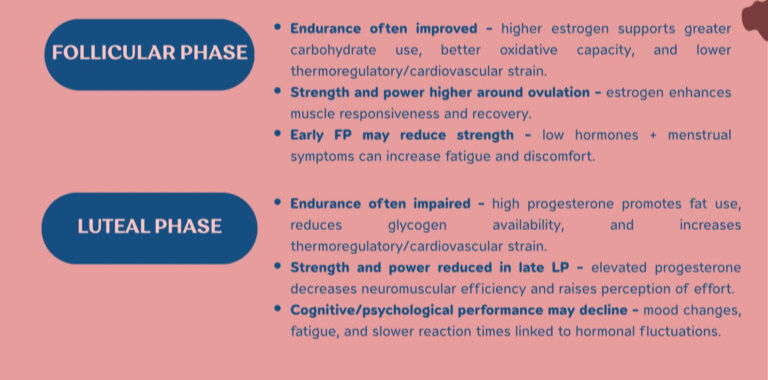
May be better in the Follicular phase (early in the cycle)
May be harder in the Luteal phase, because progesterone raises body temperature and changes how the body uses energy
Example:A long-distance runner might feel they overheat faster in the luteal phase.
2. Strength & Power
Strength may dip in the Late Luteal phase (PMS), possibly due to neuromuscular changes.
3. Mood & Cognitive Factors
Hormones can affect:
Focus
Motivation
Stress tolerance
These can change decision-making in fast sports like football or basketball.
Performance Trends by Phase (Simple Table)
Phase | Aerobic | Strength | Anaerobic | Endurance |
Early Follicular | ⭐ Best | 👎 Worst | Mixed | ⭐ Best |
Late Follicular | Mixed | Mixed | 👎 Worst | Mixed |
Ovulation | Mixed | ⭐ Best | ⭐ Best | Slightly ↓ |
Late Luteal (PMS) | 👎 Worst | 👎 Worst | Mixed | Mixed |
Recommendations
Every woman is different. Cycles vary in:
Length
Hormone levels
Symptoms
So there is no one-size-fits-all plan. However, tracking the cycle can help athletes adjust training and feel more in control.
Examples:
Plan heavy strength sessions around ovulation when you feel most powerful
Schedule lighter training or extra recovery during PMS
Track symptoms to learn personal patterns
Conclusion
Performance can change throughout the menstrual cycle, but every woman responds differently. Tracking your own body is the best way to understand how your cycle affects your training. More research is still needed.

Comments