

Accelerate Your Bone Healing: The Science of Nutrition and Supplements

Updated: Jan 2
Breaking a bone can feel like hitting pause on life. But did you know that what you eat—and when you take supplements—can significantly affect how fast and how well your bones heal? Science shows that the right nutrients support every stage of bone repair, from the first clot to a fully remodeled bone. Here’s your ultimate guide to nutrition, supplements, and timing for optimal recovery.
Understanding Bone Healing
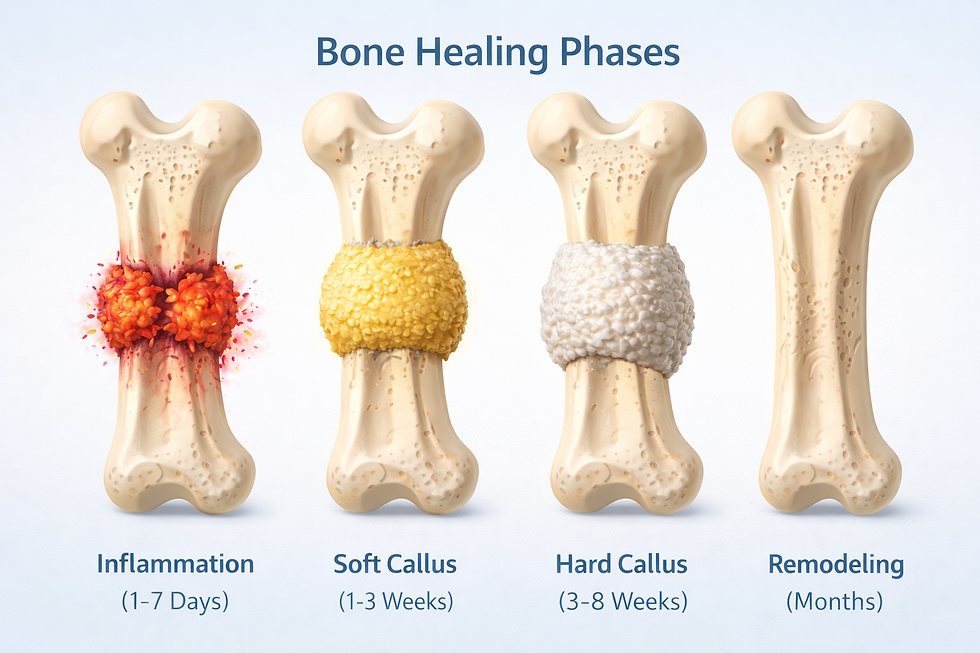
Bone doesn’t just knit back together magically; it fascinated process that goes through four distinct phases:
Inflammatory Phase (Days 1–7):
The body forms a blood clot (hematoma) at the fracture site, bringing cells that clean debris and start repair. Pain, swelling, and redness are normal.
Soft Callus Phase (Weeks 1–3):
Cartilage begins to form a bridge between the broken ends. The bone is still weak but laying the foundation for new tissue.
Hard Callus Phase (Weeks 3–8):
The cartilage transforms into hard bone, stabilizing the fracture. Movement and controlled weight-bearing may begin.
Remodeling Phase (Months to Years):
Bone reshapes and strengthens, returning to near-normal structure. Gradually, normal activity and higher stress can resume.
Each stage needs specific nutrients to ensure proper healing and bone strength.
Nutrients That Speed Recovery

Protein:
Your Bone’s Building Blocks
Bone tissue is ~50% protein by volume. Protein provides amino acids for collagen and tissue repair.
Daily target: 1.2–1.5 g/kg of body weight
Sources: Lean meat, fish, eggs, dairy, legumes, tofu
Protein types matter:
Whey protein: Fast-digesting; best post-therapy or between meals for quick amino acid delivery.
Casein protein: Slow-digesting; ideal before bed for overnight repair.
Collagen peptides: Supplies collagen-specific amino acids (glycine, proline) crucial for soft callus formation. Combine with vitamin C for maximum effect.
Vitamins and Minerals
Nutrient | Role in Healing | Best Source |
Vitamin C | Collagen formation | Citrus, berries, peppers, broccoli |
Vitamin D | Calcium absorption & bone mineralization | Sunlight, fatty fish, fortified foods |
Calcium | Structural mineral | Dairy, fortified plant milks, leafy greens |
Magnesium | Bone metabolism, supports calcium & vitamin D | Nuts, seeds, whole grains, leafy greens |
Vitamin K | Binds calcium into bone matrix | Kale, spinach, broccoli |
Timing Your Supplements for Maximum Absorption
Taking the right nutrients is important, but timing can amplify results. Here’s the science-backed approach:
Time | Supplement | Notes |
Morning (empty stomach) | Collagen peptides + Vitamin C | Stimulates collagen synthesis, supports soft callus formation |
Breakfast | Vitamin D + Calcium + Fat | Fat-soluble vitamins require dietary fat |
Mid-morning | Whey protein | Rapid amino acids for tissue repair |
Lunch | Balanced meal | Protein, vegetables, micronutrients |
Evening | Magnesium | Supports relaxation, bone metabolism |
Before bed | Casein protein | Slow release overnight for sustained amino acid supply |

Tips:
Take Vitamin K with any fat-containing meal.
Avoid high-dose calcium at the same time as collagen or iron, as absorption may compete.
Split calcium and magnesium doses for better absorption.
Combining Supplements Wisely
Synergistic pairs:
Collagen + Vitamin C: Essential for collagen matrix formation
Calcium + Vitamin D: Improves bone mineralization
Vitamin K + Vitamin D + Calcium: Supports calcium binding into bone
Pairs to avoid at the same time:
Collagen + high-dose calcium (split by 1–2 hours)
Calcium + iron (competition for absorption)
High-dose calcium + magnesium (split doses)
Putting It All Together
Meet your total protein goal every day using food first, supplemented by whey, casein, or collagen as needed.
Support collagen formation early with collagen peptides + vitamin C.
Ensure calcium and vitamin D adequacy, especially in older adults or those with limited sun exposure.
Use timing strategically to maximize absorption and tissue repair.
Avoid lifestyle pitfalls: smoking and excess alcohol slow healing significantly.
Bottom Line
Bone healing is a team effort between your body, medical care, and smart nutrition. By combining the right proteins, vitamins, and minerals at the right times, you can support faster recovery, stronger bones, and a smoother return to daily life.

Comments